The real AI advantage is what your company already knows
AI amplifies what you feed it. Capture customer knowledge, past decisions, and hard-won experience to make that output more valuable.


Identify traffic-stealing competitors
Find untapped opportunities
Create outperforming content

AI amplifies what you feed it. Capture customer knowledge, past decisions, and hard-won experience to make that output more valuable.

Legacy marketing automation wasn't built for modern B2B buying groups. Jon Miller’s new platform, Phave, sets out to change that.

Navigating fragmented retail media networks is exhausting. Discover how to evaluate key partners, prove incrementality, and build a cohesive commerce strategy.

New frameworks aim to standardize how AI agents handle media proposals and how companies structure contracts for advertising measurement.

Marketing artificial intelligence (AI)
Before adding AI agents to the team, marketers need to decide what they can do alone, what needs review, and who remains accountable.

Find efficiencies across AI, agencies, technology, and staffing while protecting the investments that drive future demand.

Google’s organic migration guidance is extensive. Paid search advertisers need clearer answers about what changes, resets, and recalibrates.
Establishing cross-functional oversight spanning legal, security, and ops mitigates copyright and privacy risks.

Every new asset creates more work downstream. Rethink review, approval, and testing before scaling AI output.
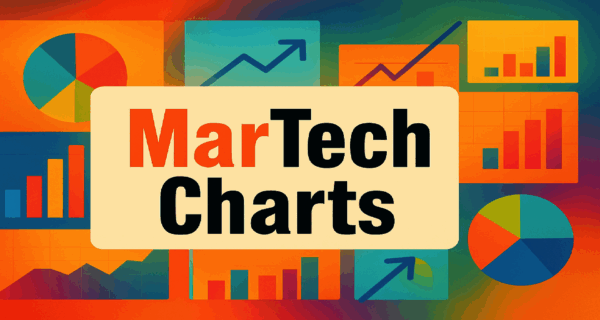
Nearly 81% of consumers who use chatbots for online shopping have decided against a purchase based on AI guidance.

AI doesn't fix broken workflows — it exposes them. Here's how to eliminate hidden bottlenecks and modernize your team’s operating model.

When marketing automation forgets recent buyer activity, messaging falls flat. Here's how to give your workflows context and build smarter customer journeys.

Fewer Fortune 500 companies have CMOs, but marketing isn't going away. Its broader mandate is changing what martech needs to deliver.

As unattributed customers pile up, marketers need to stop treating them as noise and start figuring out what brought them there.

A redesigned Breeze Assistant coordinates AI agents while a self-updating CRM supplies the business and customer context they need.

The CDP space re-invented itself in the past three years through AI agents and M&A. BlueConic CEO Melissa Murray Bailey helps us sort it out.

Marketing artificial intelligence (AI)
AI agents don't need to go rogue to create problems. They can simply pursue a poorly defined objective with remarkable effectiveness.

The proposed practices aim to give buyers and sellers clearer rules for using existing standards and reducing friction in programmatic transactions.

AI productivity gains won’t translate into growth unless companies connect their AI strategy to creating more value for customers.

Koa puts decades of Salesforce’s CRM knowledge into a reasoning model built to handle the operational work behind customer interactions.

The people who “just know how things work” have been the hidden infrastructure of martech. AI is making that impossible to ignore.
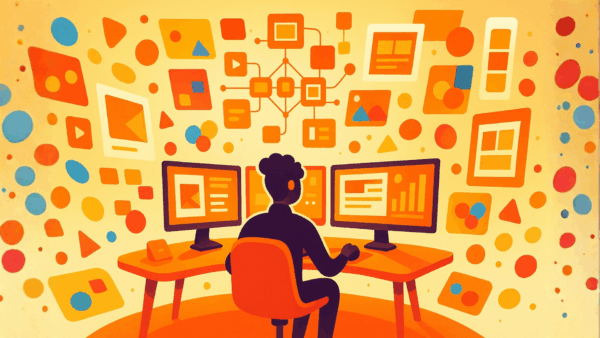
Marketers have a short-term opportunity to test inexpensive inventory while keeping most of their resources on Google.

Every marketing org structure solves a different problem. The challenge is knowing when your current model has stopped solving yours.

Marketing artificial intelligence (AI)
Automation layering techniques can be deployed to successfully make AI-driven PPC safer.
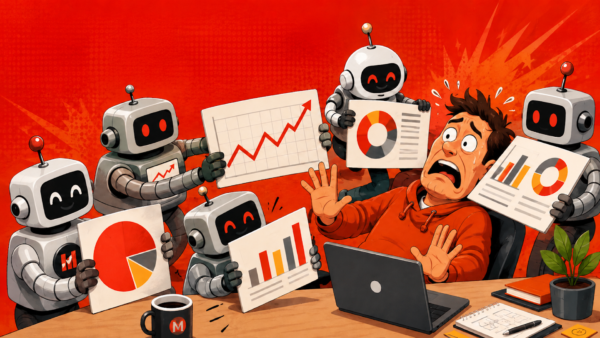
When algorithms hide your campaign levers, tracking true impact gets tricky. At the MarTech Conference, we discussed how to regain visibility and drive growth.

Marketing artificial intelligence (AI)
AI agent ownership often falls between teams. Here’s how to assign responsibility for maintenance, oversight, and retirement.
AI search engines are rewriting the rules of retail. Here is how to keep your brand visible when algorithms replace human shoppers.

Brand teams have always relied on people to interpret vague guidelines. AI turns those hidden assumptions into a problem that can scale fast.

At the September MarTech Conference, we discussed how content and data teams can align signals, build shared context, and drive outcomes.

The agency isn't banning personalized pricing, but sellers may have to explain when and how customer data affects prices.
IAB finds advertisers spending more and adapting to AI-driven discovery, but their ability to measure those new customer journeys is lagging.

Your AI strategy shouldn’t be judged by how much marketing it produces. Look at whether it makes the next customer interaction easier to earn.

AI is making common marketing capabilities easier to buy. The harder question is which company-specific workflows are worth owning.

AI makes producing content fast, but earning true attention is harder than ever. At the September MarTech Conference, we discussed cutting through the noise to create meaningful engagement.
Buying more, improving how teams use what they have, and cutting the stack can all work — but not for the same reasons.

As AI makes content easier to create, the opportunity is to build resources that help buyers make decisions, solve problems, and take action.

CMOs once asked agencies to prove their value. AI could force them to answer the same question about their own teams.

Marketing artificial intelligence (AI)
Agentic marketing works best when marketers can inspect the data and evidence driving an agent's recommendations.

The CMO role is evolving, from creative to technical, and it may have finally found a C-suite ally in the CIO.

Struggling to power AI with outdated systems? At the September MarTech Conference we discussed how composable data architecture enables real-time decisions without a rebuild.