

Cycle Planning: Getting started with the Agile Marketing Navigator
During Cycle Planning, the team collaborates and plans for the work they intend to launch during a 5 or 10 day cycle.
Spy on Any Website
We recently introduced you to Agile Marketing Navigator, a flexible framework for navigating agile marketing for marketers, by marketers in the article A new way to navigate agile marketing. The navigator has four major components: Collaborative Planning Workshop, Launch Cycle, Key Practices and Roles. Within these categories, there are several sub-pieces for implementation. In recent articles, we covered the pieces in the first stop of the navigator, the Collaborative Planning Workshop.
Now we’re going to dive into our second stop on your agile marketing journey—the Launch Cycle. The Launch Cycle is a repeatable cadence for delivering valuable marketing experiences early and often. Within the Launch Cycle there are five key components—Marketing Backlog, Cycle Planning, Daily Huddle, Team Showcase and Team Improvement. Last week we shared how to build an effective Marketing Backlog. Today we’re going to take a deeper look at Cycle Planning.
Cycle planning
During Cycle Planning, the team collaborates and plans for the work they intend to launch during a 5 or 10 day cycle. The goal is for everyone on the team to commit to what work they plan to launch and to discuss how they’re going to work together to achieve that goal. The team synchronizes timing around their work and understands everything involved to deliver customer value in this launch.
To prepare for Cycle Planning, the Marketing Backlog should be ready for the team. Things to look for here are:
- Is the work in priority order?
- Is the work sized by effort?
- Do we understand any dependencies?
- Do we know what success looks like for each backlog item?
- How will we test, learn & measure our results?
The Marketing Owner should come to Cycle Planning with a Cycle Goal in mind that ladders up to the Guidepoint. This is meant to give the team guidance on what a good outcome of the cycle will look like, but not specific tasks that they will complete.
A Cycle goal may read something like this:
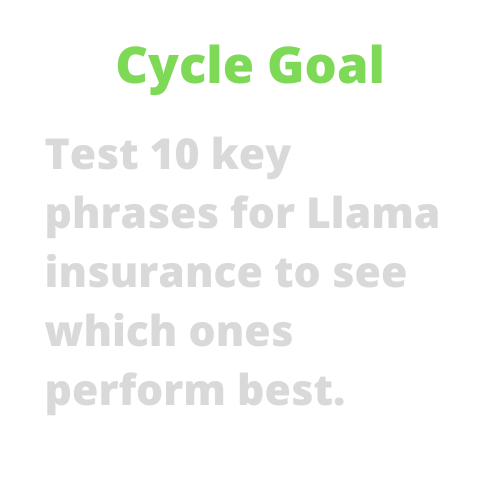
The above shares what the Marketing Owner hopes the team accomplishes, but the team decides what work they can do in the cycle to get there and may also have other work as well.
The team doing the work attends Cycle Planning. This may include part-time team members, or Supporting Cast people that have work in the upcoming Cycle. Stakeholders and Practice Leads shouldn’t attend unless they are contributing to the work.
The team is self-organizing in Cycle Planning. The team decides which marketing backlog items they can tackle during the cycle, and how they will accomplish the work by breaking out tasks.

At the end of Cycle Planning, all team members should know what work the team has committed to and how they all plan to approach getting it done. The Cycle Planning eliminates siloed planning and people only focusing on their tasks and brings to light collective team ownership.
Contributing authors are invited to create content for MarTech and are chosen for their expertise and contribution to the martech community. Our contributors work under the oversight of the editorial staff and contributions are checked for quality and relevance to our readers. MarTech is owned by Semrush. Contributor was not asked to make any direct or indirect mentions of Semrush. The opinions they express are their own.

Add us as a preferred source on Google
Google's "preferred sources" feature allows users to customize their search results by selecting news outlets they want to see more often in the "Top Stories" section.
Add Martech NowRelated Articles

Why marketers have shown resistance to agile frameworks for their work — and how to overcome that resistance.
Read More
A discussion with our expert contributor about how she got into agile marketing and what the future holds for the space.
Read More
Download a free ebook containing all you need to know about the Agile Marketing Navigator.
Read More
Here's how to manage relationships between an agile marketing Team and Stakeholders who have a vested interest in the work the Team is doing.
Read MoreRelated Articles
Why marketers have shown resistance to agile frameworks for their work — and how to overcome that resistance.
Read More
A discussion with our expert contributor about how she got into agile marketing and what the future holds for the space.
Read More
Download a free ebook containing all you need to know about the Agile Marketing Navigator.
Read More
Here's how to manage relationships between an agile marketing Team and Stakeholders who have a vested interest in the work the Team is doing.
Read More