

The hidden fragility of performance marketing
The pursuit of measurable efficiency can leave brands vulnerable when competitors, platforms, or AI reshape customer discovery.
Spy on Any Website
“What gets measured gets managed” is usually attributed to Peter Drucker. Yet according to the Drucker Institute, he never said it. Writer Simon Caulkin traced the phrase to V. F. Ridgway’s 1956 warning about measurement.
Caulkin’s point was that the phrase is a warning, not a slogan. What gets measured gets managed, even when measuring it is pointless, and even when the managing harms the organization.
Marketing seems to remember the slogan and forget the warning, increasingly to its detriment. When measurement thinking takes hold (what I’d call looking just over the hood of the car instead of down the road where you’re going), you get used to simplified, quantified proxies like ROAS, CAC, and CTR.
Eventually, you’re managing the dashboard instead of a brand. Numbers instead of meaning. Rational cues instead of emotional ones. Eventually, you’re optimizing for the metric instead of the outcome.
I’ve already made the demand-side version of this argument in another article: Performance marketing captures demand but doesn’t create it, and brands that optimize the faucets while ignoring the reservoir stall on what I call the plateau of indifference.
But here’s the part that should worry your CFO more than your CMO. Optimizing for performance metrics doesn’t just slow growth. It makes your brand fragile.
The world’s most powerful SEO platform, purpose-built for Enterprise.
Why marketing efficiency can create fragility
In his 2012 book “Antifragile,” Nassim Taleb draws a three-way distinction. Fragile things break under stress. Robust things resist breaking. But antifragile things get stronger as they face adversity. Think weightlifting. Muscle breaks down, only to heal stronger. Antifragile.
Here’s how it looks in marketing. Optimization removes everything that doesn’t get quantified in the model. The slack, the redundancy, the unmeasurable. If it can’t be quantifiably optimized, it gets cut as waste.
But something more critical by the day in this AI era disappears from performance dashboards: meaningfulness, the reason a customer chooses you when you’re not the cheapest option in front of them. Cut that, and your numbers look better, leaner, more efficient. You have higher ROAS. Lower CAC. Right up until you don’t.
A brand with no meaning has no buffer. It rents demand from the future by discounting its value in the present. Looks great on a dashboard.
But not so good when a competitor builds a brand worth choosing, when your CAC inflates, when a platform rewrites its algorithm, or when AI reroutes discovery away from the performance funnel you spent a decade optimizing. Then nothing keeps that customer in your orbit.
Being on the plateau of indifference isn’t just stalling growth. It’s like a porcelain vase sitting midcourt during the NBA playoffs. It’s fragile, sitting quietly on the balance sheet as an asset, until a competitor’s bounce pass shatters it beyond recognition.
Meaning is the antifragile asset
The opposite of a fragile brand isn’t one that survives chaos. It’s one that gains share because of that chaos.
Analysis by Alex Biel and Stephen King, cited in Kantar’s recession research, found that brands that increased advertising during a recession gained more market share than brands making the identical move during a growth period, roughly +0.9 points versus +0.5.
That’s antifragility at work. The same investment paid off more when conditions were worse. That’s the definition of antifragility. The equivalent of your muscles growing even more when nobody else is in the gym working out.
In a downturn, weak competitors cut their spend and fade. Antifragile ones take the opportunity to grow stronger and, critically in this AI era, more visible.
Kellogg’s is the textbook case. When the Great Depression hit and the cereal market split evenly with Post, Post did the predictable thing and slashed its advertising. Kellogg’s doubled its budget, moved aggressively into radio, and built a brand around a new cereal: Rice Krispies, Snap, Crackle, and Pop.
By 1933, with the economy still in ruins, its profits were up nearly 30%. A century later, it’s still one of the most resilient brands in the supermarket.
Brand meaning builds that resilience. As Binet and Field documented for years, and their 60:40 rule anticipated, antifragility comes from fortifying meaning, not spraying price-promotion messaging everywhere.
Over-index on activation spend, where returns diminish fast, and you starve the part that both compounds and buffers margin.
None of those gains require luck. Volatility is the reason they happen. Competitors that cut to protect short-term efficiency, while taking solace in their performance dashboard, hand them over unchallenged.
Recommended Articles

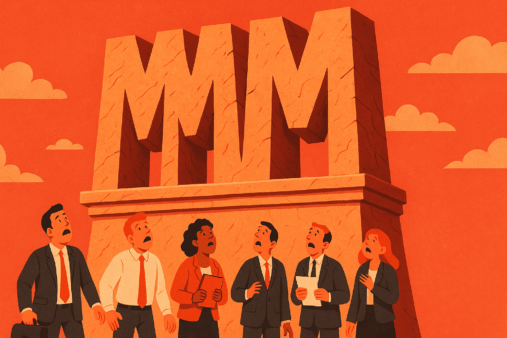
AI exposes fragility
I’ve written about how AI-mediated discovery surfaces brands with meaning rather than media budgets. The antifragility frame explains why that’s so dangerous for the performance-optimized business: in all your efforts to get bought at a discount, you’re getting ignored by AI.
A stressor’s job, in Taleb’s world, is to reveal hidden weakness. For years, a brand could look healthy because its dashboards were green, with conversions flowing and ROAS holding.
AI is the shock that pulls discovery out of the funnel those dashboards measured and reroutes it through systems that read meaning, reputation, and resonance, not price promotion.
Brands that trade meaning for efficiency don’t get a warning. They simply stop getting recommended. The dashboard never saw it coming, because the dashboard was exactly the problem.
Build the buffer before the shock
Here’s the trap inside the trap: you can’t buy your way out mid-crisis. Meaning compounds slowly and can’t be installed on deadline. The real question for your next budget review isn’t “What’s our ROAS?”
It’s the new risk question: What happens to our demand the day our performance channels get more expensive, less effective, or get routed around entirely?
If the answer is “It disappears,” you don’t have marketing efficiency. You have fragility, and you’re spending your own budget to deepen it.
Stop optimizing your brand toward the cliff. Solve something, prove something, stand for something so that when volatility comes, and it always comes, yours is the brand that gets stronger.
Contributing authors are invited to create content for MarTech and are chosen for their expertise and contribution to the martech community. Our contributors work under the oversight of the editorial staff and contributions are checked for quality and relevance to our readers. MarTech is owned by Semrush. Contributor was not asked to make any direct or indirect mentions of Semrush. The opinions they express are their own.

With over 30 years of experience in branding and creative strategy, he’s worked with some of the world’s most iconic marketing leaders at brands like Burger King, H&R Block, and Mayo Clinic and others. His work has been recognized by most every award show in advertising, but more importantly, it has driven results.
Throughout his career, Reid has seen how CMOs are not set up to win. Their success is measured by the sales curve, yet the sales team reports directly to the CEO; customer Service is reporting to Operations; or most critical, paid performance marketing leaves no room for top of funnel investment.
Reid’s mission is to change this for CMOs so they can drive the results their CEOs expect. Particularly as AI enters the chat and brand marketers are left to figure out how yet another tool must deliver results.
This is why he wrote the book Appreciated Branding. It’s all about small bets that earn appreciation in the marketplace and in the algorithms long before asking for the sale. Proactively solving bigger problems for consumers makes the brand and its values understood, cared about, “surfaced” in AI and customers motivated to act long before the inevitable “call to action.’
Having raised three children, Reid lives in the twin cities with his wife Katy, a dog and a cat with attitude problems.

Add us as a preferred source on Google
Google's "preferred sources" feature allows users to customize their search results by selecting news outlets they want to see more often in the "Top Stories" section.
Add Martech NowRelated Articles
AXA, Suncorp, Idomed, Heineken, and Molson got big business results from small creative ideas, showing a different model for earning attention.
Read More
New research found marketers invest in targeting, AI, and creative while neglecting the post-click experiences they say drive paid media ROI.
Read More
Free tools have lowered the cost of marketing mix modeling, but data quality and human expertise remain the biggest barriers to success.
Read More
IAB Tech Lab's proposed SupplyChain v1.1 update could give advertisers a clearer view of every company that touches a programmatic bid request.
Read MoreRelated Articles
AXA, Suncorp, Idomed, Heineken, and Molson got big business results from small creative ideas, showing a different model for earning attention.
Read More
New research found marketers invest in targeting, AI, and creative while neglecting the post-click experiences they say drive paid media ROI.
Read More
Free tools have lowered the cost of marketing mix modeling, but data quality and human expertise remain the biggest barriers to success.
Read More
IAB Tech Lab's proposed SupplyChain v1.1 update could give advertisers a clearer view of every company that touches a programmatic bid request.
Read More