

Anthropic partnership makes Salesforce’s interface optional
Claudeforce puts Salesforce data and workflows inside Claude, pointing toward a future where AI becomes the interface to enterprise software.
Spy on Any Website
Salesforce is making one of the biggest pieces of enterprise software optional: its own interface.
The company’s expanded partnership with Anthropic, called Claudeforce, puts Salesforce data and workflows directly inside Claude. Its first product, Salesforce in Claude, lets users query CRM data, update records, review deals, and run workflows without opening Salesforce itself. It launches with 37 prebuilt sales skills and is available to select pilot customers, with an open beta planned for September. Marketing, service, and commerce capabilities are expected over the next few months.
That makes Claudeforce more interesting than another AI integration. Salesforce is betting its long-term value lies less in the screens people use and more in the customer data, business rules, permissions, workflows, and other infrastructure behind them.
Patrick Stokes, Salesforce president of applications and marketing, told VentureBeat: “The value of Salesforce is not in our UI itself. It’s not the application. The value of Salesforce is in the data and the metadata.”
Salesforce without the Salesforce interface
Salesforce started laying the groundwork in March with Headless 360, which lets AI agents access Salesforce data and workflows through APIs and Model Context Protocol servers without using its traditional interface. Claudeforce packages that architecture into a product designed for regular business users rather than developers building their own connections.
An administrator connects Salesforce to Claude once, and the integration inherits existing Salesforce permissions. If someone cannot see or change a particular record in Salesforce, Claude cannot either. Actions also run through Salesforce, so existing business rules continue to apply.
For now, Salesforce in Claude is aimed at sellers. They can ask Claude to prepare for meetings, review pipeline, assess deal health, update records, and perform other CRM tasks through conversation rather than navigating Salesforce screens. Salesforce says marketing capabilities will follow, although those features are not yet available.
The world’s most powerful SEO platform, purpose-built for Enterprise.
One demonstration points toward what this could eventually mean for marketers. Salesforce showed Claude creating a custom dashboard from Salesforce data on the fly. Instead of choosing among predesigned dashboards and interfaces, a user could describe the information they need and have Claude construct a view for that task. Salesforce stressed that the demonstration itself is not a product feature.
The AI becomes the interface
That model could change how marketers think about their martech stacks. Much of the work currently involves moving among applications to find data, configure workflows, pull reports, and take actions. An AI interface that can integrate with those systems could move some of that work out of individual applications.
The underlying platforms don’t disappear in that scenario. Their role changes. Data, permissions, APIs, business logic, and workflows become more important because those are the resources AI needs to do useful work.
Salesforce CEO Marc Benioff argues this is why predictions of a “SaaSpocalypse” get the relationship between AI and enterprise software wrong.
“This SaaSpocalypse narrative has been such nonsense,” Benioff told CNBC. “Frontier models depend on CRM. They don’t replace it. Salesforce is first and foremost in the data business.”
Salesforce is simultaneously bringing Claude further inside its own products. Claude will be available as a reasoning model in Agentforce and will power Agentforce Vibes and Agentforce Coworker by default. Salesforce also says Claude will become the default model across Slack.
Salesforce distinguishes those uses from Salesforce in Claude. Agentforce is positioned primarily for autonomous work and interactions with customers, while Salesforce in Claude is aimed at employees using AI to do their everyday work.
Recommended Articles
From software seats to AI consumption
There is another change marketers and marketing operations teams should watch: how this gets paid for.
Customers will pay Salesforce for Claudeforce activity through its headless consumption model, with the amount of API access varying by Salesforce edition. They contract separately with Anthropic for Claude usage.
That arrangement points toward a different software cost model if AI agents become significant consumers of martech. Traditional SaaS pricing largely revolves around people holding licenses and using applications. When an AI agent makes the calls instead, API and AI consumption become a larger part of the equation.
For marketing operations teams, that could eventually change how stack costs are evaluated. A platform used less frequently through its interface could still generate substantial usage as agents continuously retrieve data and execute workflows behind the scenes.
Claudeforce starts with sales, so its impact on marketing remains largely prospective. But Salesforce has made the larger bet clear: The CRM doesn’t need to be the place where people work to remain the system their work depends on. If that model extends across martech, the value of an application could increasingly depend on what AI can securely do with it rather than how much time marketers spend inside it.
MarTech is owned by Semrush. We remain committed to providing high-quality coverage of marketing topics. Unless otherwise noted, this page’s content was written by either an employee or a paid contractor of Semrush Inc.

Constantine von Hoffman is senior editor of MarTech. A veteran journalist, Con has covered business, finance, marketing and tech for CBSNews.com, Brandweek, CMO, and Inc. He has been city editor of the Boston Herald, news producer at NPR, and has written for Harvard Business Review, Boston Magazine, Sierra, and many other publications. He has also been a professional stand-up comedian, given talks at anime and gaming conventions on everything from My Neighbor Totoro to the history of dice and boardgames, and is author of the magical realist novel John Henry the Revelator. He lives in Boston with his wife, Jennifer, and either too many or too few dogs.
View Author Profile
Add us as a preferred source on Google
Google's "preferred sources" feature allows users to customize their search results by selecting news outlets they want to see more often in the "Top Stories" section.
Add Martech NowRelated Articles

Disconnected systems create missed work and hours of admin. The real measure of martech productivity is how much work the stack eliminates.
Read More
Learn how to audit martech vendors, limit their access to sensitive data and make security part of every software purchase.
Read More
Customer relationship management (CRM)
5 minutes readResearchers say software vendors routinely collect customer and business data and incorporate it into commercial products.
Read More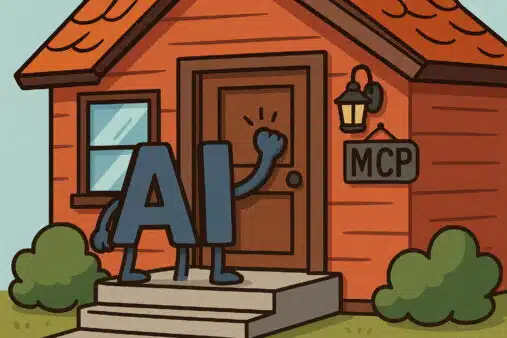
Customer relationship management (CRM)
6 minutes readAI assistants like ChatGPT and Claude can now plug straight into your marketing systems. That connection is powerful. But it doesn't replace the platform behind it. It depends on it.
Read MoreRelated Articles
Disconnected systems create missed work and hours of admin. The real measure of martech productivity is how much work the stack eliminates.
Read More
Learn how to audit martech vendors, limit their access to sensitive data and make security part of every software purchase.
Read More
Customer relationship management (CRM)
5 minutes readResearchers say software vendors routinely collect customer and business data and incorporate it into commercial products.
Read More
Customer relationship management (CRM)
6 minutes readAI assistants like ChatGPT and Claude can now plug straight into your marketing systems. That connection is powerful. But it doesn't replace the platform behind it. It depends on it.
Read More