

AI shopping hits a trust ceiling even as AI adoption rises
Most consumers use AI to research products, but hesitation around payments shows a clear ceiling on how far AI commerce can go.
Spy on Any Website
AI is becoming a standard part of how people shop, but there is a clear limit to how far consumers are willing to let it go. New data from Exploding Topics shows 77.6% of consumers have used AI to help with shopping in the past six months, with more than 43% doing so weekly.
That level of adoption suggests AI is now embedded in everyday buying behavior. At the same time, most of those users are not ready to let AI take the final step and complete a purchase.
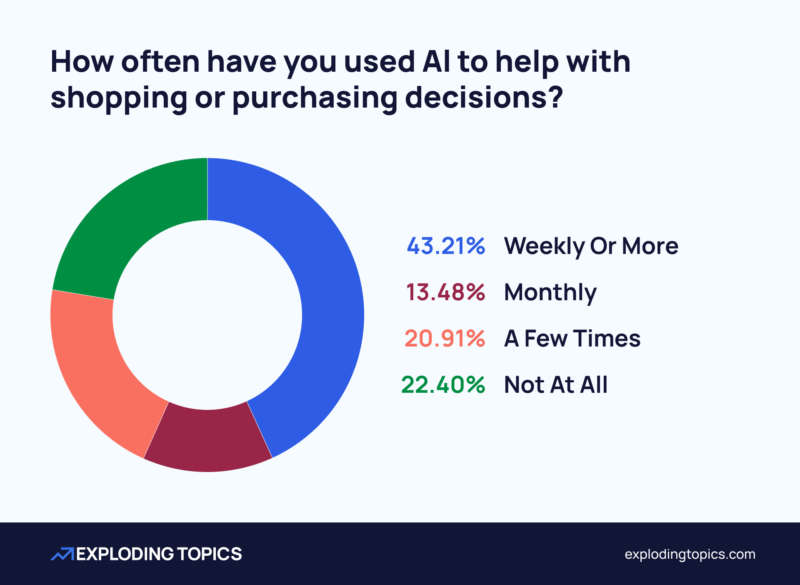
This gap between usage and trust points to an emerging ceiling in AI commerce. Consumers are comfortable using AI to inform decisions, but not to act on their behalf.
You can see that divide in how AI is used today. Most shoppers rely on it for product research and price comparison, not for transactions, which keeps it firmly in the discovery phase.
Understanding the trust ceiling
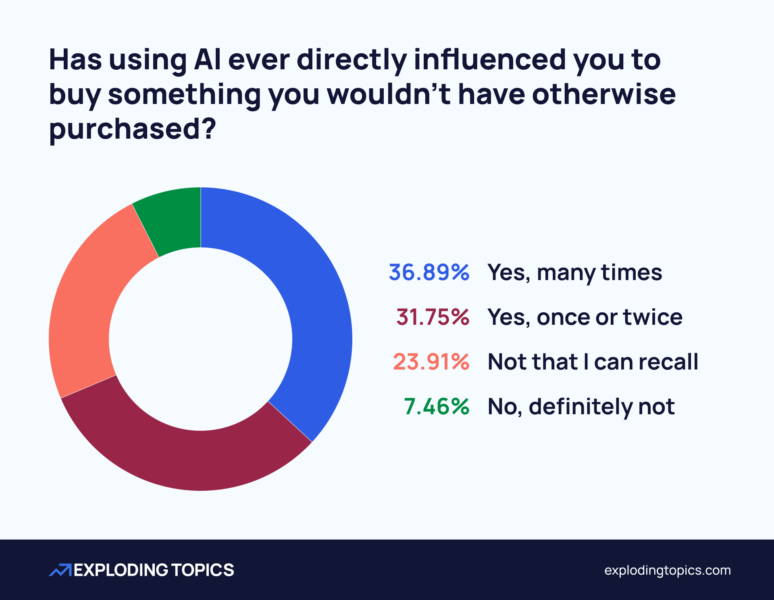
AI is proving effective at shaping what people buy. About 68.64% of users say it has influenced a purchase they would not have made otherwise, giving it real weight in the decision-making process.
But trust drops sharply when money enters the equation. More than half of consumers are uncomfortable with AI storing their card details, and the most common amount they would allow AI to spend autonomously is $0.
Even among frequent users, most cap that number at $50 or less. That suggests the issue is not familiarity with AI, but confidence in handing over control.
This creates a structural split in the shopping journey. AI is becoming a decision layer that shapes consideration, but the transaction layer still depends on human action.
What this means for marketers
For martech teams, the implications are immediate. If AI is influencing decisions but not closing transactions, then visibility inside AI-generated responses becomes critical.
Nearly half of shoppers either start with AI or use it to validate choices, which means being cited or recommended can directly impact conversion paths. This is where generative engine optimization starts to play a larger role alongside traditional SEO.
At the same time, perception is becoming a constraint. Only a small share of consumers believe AI shopping tools primarily serve them, while many think they benefit platforms and advertisers instead.
That skepticism carries over into new features like AI-driven checkout. Even regular users describe these tools as suspicious or untrustworthy, which slows adoption of fully automated commerce.
The result is a two-speed market. AI adoption will continue to grow, but its role will expand unevenly across the funnel, with influence outpacing execution.
The takeaway is straightforward. AI can guide decisions and shape demand, but for now, the final step still belongs to the consumer.
A summary of the report is available here. (No registration is required)
MarTech is owned by Semrush. We remain committed to providing high-quality coverage of marketing topics. Unless otherwise noted, this page’s content was written by either an employee or a paid contractor of Semrush Inc.

Constantine von Hoffman is senior editor of MarTech. A veteran journalist, Con has covered business, finance, marketing and tech for CBSNews.com, Brandweek, CMO, and Inc. He has been city editor of the Boston Herald, news producer at NPR, and has written for Harvard Business Review, Boston Magazine, Sierra, and many other publications. He has also been a professional stand-up comedian, given talks at anime and gaming conventions on everything from My Neighbor Totoro to the history of dice and boardgames, and is author of the magical realist novel John Henry the Revelator. He lives in Boston with his wife, Jennifer, and either too many or too few dogs.
View Author Profile
Add us as a preferred source on Google
Google's "preferred sources" feature allows users to customize their search results by selecting news outlets they want to see more often in the "Top Stories" section.
Add Martech NowRelated Articles

Use a CRM recency ladder to prioritize customer segments and coordinate holiday campaigns across email and paid media.
Read More
Marketing artificial intelligence (AI)
11 minutes readCustomer preferences, purchase decisions, and even checkout are moving beyond brands' control. Here's what you can still influence — and how.
Read More
Holiday sales could grow even as consumers trade down, stretch purchases across the season, and use discounts to stock up on essentials.
Read More
AI search engines are rewriting the rules of retail. Here is how to keep your brand visible when algorithms replace human shoppers.
Read MoreRelated Articles
Use a CRM recency ladder to prioritize customer segments and coordinate holiday campaigns across email and paid media.
Read More
Marketing artificial intelligence (AI)
11 minutes readCustomer preferences, purchase decisions, and even checkout are moving beyond brands' control. Here's what you can still influence — and how.
Read More
Holiday sales could grow even as consumers trade down, stretch purchases across the season, and use discounts to stock up on essentials.
Read More
AI search engines are rewriting the rules of retail. Here is how to keep your brand visible when algorithms replace human shoppers.
Read More