

The most valuable AI skill takes 10 minutes a week
Mastering one AI platform matters less than regularly testing what's new and recognizing when the technology changes.
Spy on Any Website
When Humanity’s Last Exam launched in January of last year, the best AI models answered only a small fraction of its questions correctly. Today, just 18 months later, the leading model is past 50%.
That fact is at odds with our instinct to find the best AI tool and commit. Learn it deeply. Build everything around it. That instinct made sense five years ago, when tools changed slowly enough to reward that kind of loyalty.
It doesn’t work that way anymore. That’s good news once you see it the right way. You’re not being asked to master one platform forever. You’re being invited to develop a different skill: noticing when something new changes what’s possible, and moving quickly enough to use it.
That skill compounds. A favorite tool doesn’t. Build a habit of staying current. It doesn’t require turning into a full-time AI analyst.
Pick one regular check-in. Once a week, once every two weeks, whatever fits your calendar. Spend 10 minutes scanning for anything that sounds genuinely new.
The world’s most powerful SEO platform, purpose-built for Enterprise.
When something sounds new, test it yourself. Five minutes hands-on with the tool beats an hour reading about it. You’ll know instantly whether it’s useful. That’s the whole process. Small, regular, hands-on. It takes less time than people assume, and it pays back fast.
Separate the skill from the tool
The valuable skill is knowing how to direct AI toward a useful result: a sharper headline, a faster first draft, a cleaner audience segment, or a smarter testing plan. That skill lives in you.
The tool is whatever executes that skill best at the moment.
Once you separate those, switching tools no longer feels like starting over. You’re not relearning a craft every time something new comes out. You’re pointing the same skill at a sharper instrument. Not every release deserves your attention. The benchmark jump from one-fifth to half in a year is the kind of signal worth watching.
A good filter: Does this let you do something you couldn’t do well before? If yes, it’s worth 10 minutes. If it’s just a faster version of something you already had covered, take note and move on.
Turn this into an advantage
Most teams operate as if the tools they picked a year ago are the final answer. A growing gap separates what’s available now from what people still use. You don’t need permission to close that gap. You don’t need a huge budget. You need 10 minutes a week and the willingness to open the new tool rather than just read about it.
Imagine being the person on your team who already knows what the newest model can do while everyone else finds out three months later. That’s not a stretch. That’s what happens when you build this discipline now.
A test built to be unbeatable reached expert-level performance in roughly a year. The advantage goes to the people who recognize what’s newly possible and act on it.
You don’t need to chase every release. You don’t need to become a technical expert. You need a small habit, repeated often enough that you’re never far behind.
Stay close enough to the pace, and you’ll be ready to benefit from whatever comes next.
Contributing authors are invited to create content for MarTech and are chosen for their expertise and contribution to the martech community. Our contributors work under the oversight of the editorial staff and contributions are checked for quality and relevance to our readers. MarTech is owned by Semrush. Contributor was not asked to make any direct or indirect mentions of Semrush. The opinions they express are their own.

Passionate innovator, strategist, and solutions provider. I thrive at the intersection of AI + human insight, making the complex clear and turning data into action.
Who I Advise
Fractional advisor and strategist to Chief AI Officers, CMOs, and Customer Experience leaders who want to:
• Embed AI into insights and customer experience
• Translate research into growth-driving strategies
• Build customer-centric cultures that scale
Select Achievements
• Most Innovative Researcher of the Year (TMRE)
• CX Elite Award for leading a global customer experience transformation
• Scaled one platform from 4M to 40M subscribers in just 6 months
• Increased KPIs across NPS, retention, and revenue with VOC, NPS, and AI-driven CX programs (+15 NPS lift in one year)
🚀 What I Deliver
✅ AI Insights Readiness Audits
✅ Executive Advisory & Retainers
✅ CX & Insights Transformation Sprints
✅ Emotion AI Strategy & Workshops"

Add us as a preferred source on Google
Google's "preferred sources" feature allows users to customize their search results by selecting news outlets they want to see more often in the "Top Stories" section.
Add Martech NowRelated Articles

Marketing can produce more with AI, but every new capability creates work to govern, integrate, measure, and maintain. That’s where AI debt builds.
Read More
Not every change in a marketing metric deserves a response. Marketers need to separate temporary fluctuations from signals worth acting on.
Read More
AXA, Suncorp, Idomed, Heineken, and Molson got big business results from small creative ideas, showing a different model for earning attention.
Read More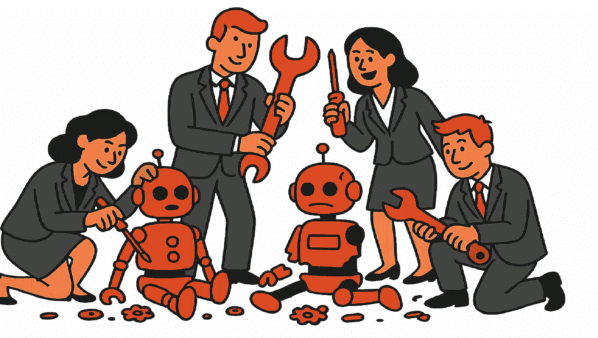
Reduce duplicate software, improve adoption, and align technology investments with governance that supports smarter purchasing.
Read MoreRelated Articles
Marketing can produce more with AI, but every new capability creates work to govern, integrate, measure, and maintain. That’s where AI debt builds.
Read More
Not every change in a marketing metric deserves a response. Marketers need to separate temporary fluctuations from signals worth acting on.
Read More
AXA, Suncorp, Idomed, Heineken, and Molson got big business results from small creative ideas, showing a different model for earning attention.
Read More
Reduce duplicate software, improve adoption, and align technology investments with governance that supports smarter purchasing.
Read More