

Email retention after Gmail’s ‘Manage Subscriptions’ rollout
Six months in, churn remains elevated across industries. Here’s how to respond with engagement-based automation and more disciplined sending strategies.
Spy on Any Website
When Gmail rolled out a new “Manage Subscriptions” feature last summer, we knew it would make an impact, particularly for brands that didn’t lean into segmentation and automated journeys and instead peppered users with frequent messaging that lacked personalization.
Six months in, the impact is deeper than we expected. Unsubscribe rates are up an average of 50%-150% across our portfolio accounts, though we’re seeing trends and silver linings that make us optimistic about healthy email performance going forward. Let’s start with what we’ve seen in client accounts.
How the impact of Manage Subscriptions has unfolded
“Declutter your inbox with Gmail’s newest feature” was the subject of a July 8, 2025, blog post from Google introducing Manage Subscriptions. We anticipated a spike in unsubscribes during the initial rollout, followed by a decline as users moved on and forgot about the functionality.
In our client accounts, we saw a significant spike in email unsubscribes across industries beginning in July, peaking in August. The unsubscribe rate has since subsided, but client rates remain elevated compared to pre-launch levels.
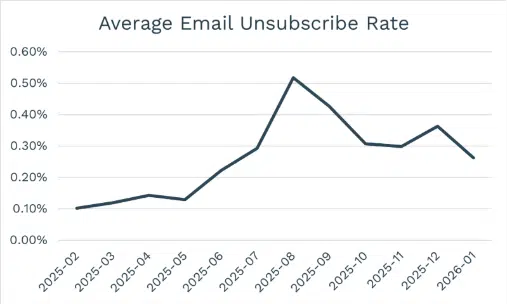
Despite the upbeat tone of Google’s announcement, the feature was rolled out quietly and users weren’t prompted to use it, so we didn’t expect widespread adoption beyond an early surge.
Gmail also intermittently promotes one-click unsubscribes in the Promotions tab, so this didn’t initially appear likely to drive a significant spike. The difference now is scale, as Manage Subscriptions centralizes the experience in a way previous prompts did not.
How to mitigate the effects of Manage Subscriptions
Our advice from the start — and we’re seeing it pay dividends in slowing unsubscribe rates for both new and longtime clients since the feature launched — has been to:
- Use segmentation to deliver personalized messaging.
- Monitor campaign frequency closely and be particularly wary of over-sending to the wrong subscriber segments, such as less engaged audiences.
- Continue prioritizing users who are engaged with your brand and content.
- Meet subscribers where they are by investing in progressive profiling and automating personalized emails based on lifecycle stage.
- Leverage action-triggered automated emails tied to user engagement so messages feel useful and relevant.
The SEO toolkit you know, plus the AI visibility data you need.

Recommended Articles
What we see on the horizon
First, the relatively bad news: We anticipate additional unsubscribe spikes around major shopping holidays such as Labor Day, Black Friday and Cyber Monday, and Christmas, when subscribers receive an influx of marketing emails from multiple brands. Be prepared with a proactive strategy around those peak periods, and ensure retention goals reflect the reality of increased email fatigue.
Now for the more optimistic outlook: This shift will push many email marketers to be more disciplined about segmentation, frequency and automated personalization, which is ultimately positive. On a tactical level, unsubscribes are preferable to spam complaints or repeatedly messaging users who don’t want to hear from you. Overall program health shouldn’t decline if you’re primarily shedding low-engagement subscribers.
Ultimately, while this feature may create short-term pressure on CRM numbers, it should validate and accelerate a more strategic approach to email marketing.
Contributing authors are invited to create content for MarTech and are chosen for their expertise and contribution to the martech community. Our contributors work under the oversight of the editorial staff and contributions are checked for quality and relevance to our readers. MarTech is owned by Semrush. Contributor was not asked to make any direct or indirect mentions of Semrush. The opinions they express are their own.

Lauren McGrath is the Director of Email Marketing at DMi Partners, a Philadelphia-based digital marketing agency founded in 2003. With over a decade of email experience, Lauren has led the development and optimzation of best-in-class automated email lifecycles leveraging various ESPs for some of America’s largest consumer brands. Her most recent focus has been developing evolving deliverability remediation strategies that have become essential for DMi’s CPG and retail clients. Based in Philadelphia, Lauren spends her free time picking up new hobbies like skateboarding, pottery, and board games.
View Author Profile
Add us as a preferred source on Google
Google's "preferred sources" feature allows users to customize their search results by selecting news outlets they want to see more often in the "Top Stories" section.
Add Martech NowRelated Articles


The default martech sales motion asks you to tear out your stack and bet 18 months on a rebuild. Buyers increasingly prefer a different path.
Read More
Marketing artificial intelligence (AI)
6 minutes readA single afternoon of tool-calling can eat a $20 monthly subscription. The fix isn't using fewer tools, it's changing where your data lives.
Read More
As AI automates workflows, scoring, and orchestration, MOps shifts from system management to business impact.
Read MoreRelated Articles
The default martech sales motion asks you to tear out your stack and bet 18 months on a rebuild. Buyers increasingly prefer a different path.
Read More
Marketing artificial intelligence (AI)
6 minutes readA single afternoon of tool-calling can eat a $20 monthly subscription. The fix isn't using fewer tools, it's changing where your data lives.
Read More
As AI automates workflows, scoring, and orchestration, MOps shifts from system management to business impact.
Read More