

Google changed its content guidance. Don’t expect a reset.
The company wants more human review of AI content, but won't guarantee that following the rules will bring back lost search traffic.
Spy on Any Website
Google has updated its content guidance again, and marketers can be forgiven for thinking they’ve heard this one before.
The latest change puts more explicit responsibility on publishers using generative AI. Google now says it is critical to manually fact-check and review AI-generated content before publishing, including titles, meta descriptions, structured data, and image alt text. It also points publishers back to its long-standing rules against scaled content that adds little value.
So, yes, the message is familiar: make useful content, don’t mass-produce junk, and don’t expect automation to excuse weak work.
The harder question is the one marketers with battered organic traffic care about: If you do what Google says, will the traffic come back?
Google still won’t promise that.
Haven’t we heard this before?
Many times.
Google has been telling publishers to create useful, trustworthy content for years. The language has evolved through Panda, E-A-T, E-E-A-T, Helpful Content updates, spam updates, and now more explicit guidance for generative AI.
And publishers have spent years figuring out how to satisfy whatever signals seemed visible at the time.
Author bios appeared everywhere. Articles got longer. FAQs multiplied. More citations went in. Content teams chased whatever combination of structure, keywords, backlinks, and formatting looked like the safest route through the latest update.
Sometimes that worked. Sometimes it didn’t.
Then came AI and its mass production of content that looks polished enough on first inspection. Google’s current guidance takes direct aim at that. Its spam policies say using genAI to create large numbers of pages without adding value can violate its rules on scaled content abuse.
The issue isn’t AI by itself. The issue is what happens when AI turns “publish more” into the easiest thing in the world to do.
The world’s most powerful SEO platform, purpose-built for Enterprise.
Will fixing content restore traffic?
Possibly, but Google is making no promises.
The update guidance says sites that suffer large ranking drops should assess the site broadly and make meaningful improvements rather than chase quick fixes. Google also says those changes can take time to register and, importantly, that there is no guarantee they will produce a noticeable improvement in search results.
That last part deserves more attention than it usually gets.
Marketers have been through enough core updates to know that “improve your content” and “your traffic will recover” are very different statements.
Even if Google reassesses a page more favorably, that page is competing in a search environment that looks different from the one that produced its old traffic. AI Overviews, forums, video, and other result formats take up more space in the results.
A page can get better without getting its clicks back.
That distinction is especially important now. Ranking recovery and traffic recovery are no longer the same thing when Google itself can answer more of the query before someone reaches your site.
Even a perfectly rehabilitated article can’t reclaim a click Google no longer sends.
Recommended Articles
So why take this update seriously?
Google has been warning against low-value content for years, but AI makes low-value content vastly easier to create at scale.
The updated guidance assumes AI will be part of the publishing process and focuses on what happens before the piece goes live. There must be a real, live editor for each piece. That’s someone with enough context, access, and authority to improve the work or kill it if it is, to use a technical term, crap. And that review doesn’t stop at body copy. Google explicitly includes title elements, meta descriptions, structured data, and image alt text — which we’ve all had AI doing for a while.
That turns this from yet another SEO checklist into a content-operations problem.
If your workflow is built around generating 500 articles and giving each one a quick edit before publication, adding a better prompt won’t solve the problem.
Google used to treat “helpful content” more like a separate system, one that rolled out in distinct updates. Now those signals are part of its broader core ranking systems, so there isn’t a single obvious update publishers can wait for to see whether the changes worked.
Google has less reason to reward content that merely restates information available everywhere. If a page gives the same basic answer as 50 other pages, AI Overview can handle that without requiring the searcher to click anywhere. Original data, testing, case studies, and direct experience matter more because they’re harder to replace with another generic summary.
That’s a stronger reason to rethink the content model than another round of advice about keyword density or article length.
The skeptical reaction from search practitioners is understandable. In one Reddit discussion about the update, commenters called the guidance vague and questioned how Google would know whether there’s been a human review.
Fair enough. Google still isn’t giving publishers a reliable formula for recovery, but marketers shouldn’t need one to know it’s time to stop funding high-volume AI slop.
MarTech is owned by Semrush. We remain committed to providing high-quality coverage of marketing topics. Unless otherwise noted, this page’s content was written by either an employee or a paid contractor of Semrush Inc.

Constantine von Hoffman is senior editor of MarTech. A veteran journalist, Con has covered business, finance, marketing and tech for CBSNews.com, Brandweek, CMO, and Inc. He has been city editor of the Boston Herald, news producer at NPR, and has written for Harvard Business Review, Boston Magazine, Sierra, and many other publications. He has also been a professional stand-up comedian, given talks at anime and gaming conventions on everything from My Neighbor Totoro to the history of dice and boardgames, and is author of the magical realist novel John Henry the Revelator. He lives in Boston with his wife, Jennifer, and either too many or too few dogs.
View Author Profile
Add us as a preferred source on Google
Google's "preferred sources" feature allows users to customize their search results by selecting news outlets they want to see more often in the "Top Stories" section.
Add Martech NowRelated Articles

Local search behavior now straddles multiple platforms, with consumers traversing a 'verification loop' to find actionable information.
Read More
AI is changing search, but some of the loudest claims about traffic, content, measurement, and SEO jobs don’t hold up when you check the numbers.
Read More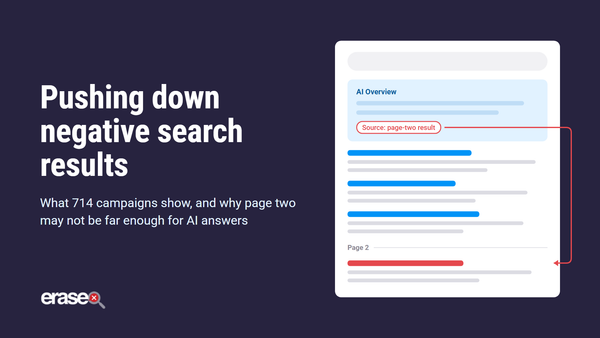
Starting position and top 10 placements decided the outcome, not publishing volume. Plus why Page 2 isn't far enough for AI Overviews.
Read More
Move beyond optimizing individual images by connecting visual assets to authoritative entity data and keeping those signals consistent.
Read MoreRelated Articles
Local search behavior now straddles multiple platforms, with consumers traversing a 'verification loop' to find actionable information.
Read More
AI is changing search, but some of the loudest claims about traffic, content, measurement, and SEO jobs don’t hold up when you check the numbers.
Read More
Starting position and top 10 placements decided the outcome, not publishing volume. Plus why Page 2 isn't far enough for AI Overviews.
Read More
Move beyond optimizing individual images by connecting visual assets to authoritative entity data and keeping those signals consistent.
Read More