

3 ways phishing destroys marketing ROI
Columnist Estelle Derouet discusses the direct hit that fraudulent email can take on your revenue and what you can do to fight it.
Spy on Any Website

Marketers rely on key performance indicators (KPIs) to prove their value to the business. And email is a key driver of those metrics, generating more leads, conversions and revenue than any other distribution channel.

Unfortunately, the most valuable marketing channel is also the least secure. In the first quarter of 2016, the Anti-Phishing Working Group (APWG) observed more phishing attacks than at any other time in history. And this trend has big consequences.
Below, we explore three ways phishing destroys your marketing ROI — and what you can do about it.
1. Phishing destroys brand trust
Brand trust is invaluable for the business. Email fraud compromises that trust. If your company’s email channel is targeted by cybercriminals, you can expect that metrics like these will suffer:

2. Phishing reduces email marketing performance
Phishing not only tarnishes your reputation, it also damages the deliverability and engagement of your legitimate email programs.
To discover how, Return Path (my employer) conducted an analysis of Gmail and Yahoo inbox placement rates and read rates within 10 days of a detected phishing attack. We focused our research on 71 top brands between April 1 and September 30, 2015, and discovered the following:
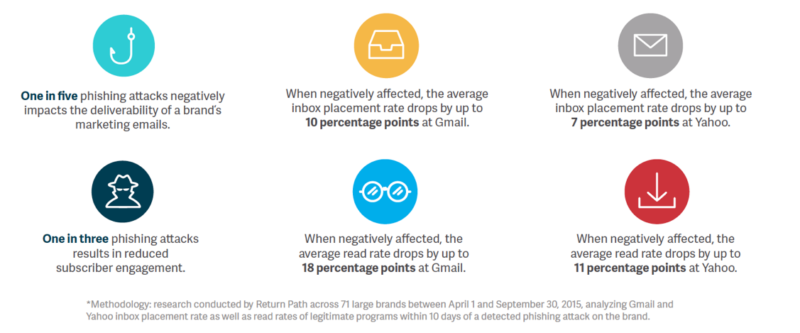
As subscriber sentiment declines, so do inbox placement rates. And with reduced deliverability comes reduced ROI.
Recommended Articles

3. Phishing erodes email marketing revenue
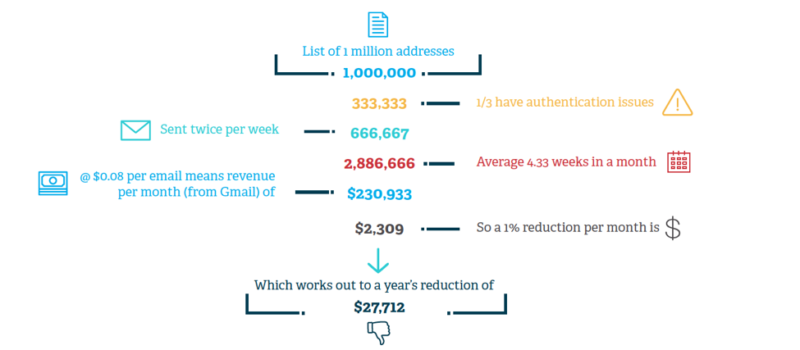
Phishing has a direct impact on marketing-generated revenue. If you aren’t authenticating your legitimate emails properly, they could be considered spam by mailbox providers and result in reduced deliverability — or be rejected outright.
Consider the following hypothetical scenario:
The average large company spends $3.7 million per year to fight phishing, including customer service support, regulatory fines and more.
Marketers don’t dispute the high cost of email fraud. A staggering 91 percent believe that fraudulent emails spoofing their brand can impact the effectiveness of email marketing programs. The problem is, they’re not doing enough about it.
Why? Because most of us do not have the visibility or resources necessary to fight back. So we don’t.

How marketers can join the fight against phishing
As guardians of the brand and owners of the email channel, it’s time for marketers to join the fight against email fraud. Doing so isn’t just about preventing a future attack — it’s about protecting brand trust and the ROI of your email program today. Here’s how you can get started:
Authenticate your email
Your first line of defense should always be technology, not people. Ninety-seven percent of users around the globe can’t identify a sophisticated phishing message. Authenticating your email will not only help block phishing attacks before they reach your customers’ inboxes but will also preserve the effectiveness of your legitimate campaigns.
Collaborate with your security team
Partnering with your security team to develop an email security strategy is essential and is not as tricky as you might think. Like their CMO colleagues, CIOs are increasingly concerned with keeping the customer happy.
Raise awareness with top executives
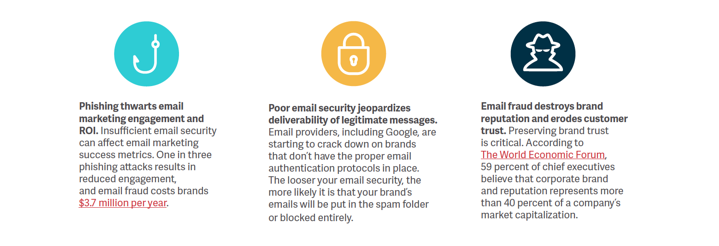
Investing in email fraud protection requires backing from the leaders at your organization. Creating a sense of urgency around this problem is a great way to this secure buy-in. Communicate the risks of not taking action. Here are three talking points to get you started:
Educate your customers
The reality is, no matter how sophisticated email authentication protocols become, some bad email will always reach the inbox. Educating customers is a great way to mitigate the impact of those fraudulent messages. Create a customer education portal, or remind customers that you’ll never ask them for certain information over email.
You can read more tips on how to fight email fraud here (registration required). Stop paying the hidden phishing tax by calling attention to this problem at your company.
Contributing authors are invited to create content for MarTech and are chosen for their expertise and contribution to the martech community. Our contributors work under the oversight of the editorial staff and contributions are checked for quality and relevance to our readers. MarTech is owned by Semrush. Contributor was not asked to make any direct or indirect mentions of Semrush. The opinions they express are their own.

Estelle Derouet is Vice President of Marketing, Email Fraud Protection at Return Path. In her role, Estelle leads a fabulously talented team of experienced B2B marketers, tasked with driving awareness and generating demand. Prior to joining Return Path in 2010, Estelle led the EMEA and APAC marketing function at enterprise mobility provider iPass for eight years. Follow her on Twitter @ederouet.
View Author Profile
Add us as a preferred source on Google
Google's "preferred sources" feature allows users to customize their search results by selecting news outlets they want to see more often in the "Top Stories" section.
Add Martech NowRelated Articles
AXA, Suncorp, Idomed, Heineken, and Molson got big business results from small creative ideas, showing a different model for earning attention.
Read More
New research found marketers invest in targeting, AI, and creative while neglecting the post-click experiences they say drive paid media ROI.
Read More
Free tools have lowered the cost of marketing mix modeling, but data quality and human expertise remain the biggest barriers to success.
Read More
IAB Tech Lab's proposed SupplyChain v1.1 update could give advertisers a clearer view of every company that touches a programmatic bid request.
Read MoreRelated Articles
AXA, Suncorp, Idomed, Heineken, and Molson got big business results from small creative ideas, showing a different model for earning attention.
Read More
New research found marketers invest in targeting, AI, and creative while neglecting the post-click experiences they say drive paid media ROI.
Read More
Free tools have lowered the cost of marketing mix modeling, but data quality and human expertise remain the biggest barriers to success.
Read More
IAB Tech Lab's proposed SupplyChain v1.1 update could give advertisers a clearer view of every company that touches a programmatic bid request.
Read More