

3 new email metrics that you need in 2026
Email performance is being redefined, and disaffection, replies and trust are replacing opens and clicks as the signals that actually matter.
Spy on Any Website
For years, email performance has been measured with a familiar set of metrics: opens, clicks and conversions.
But those numbers are becoming less useful — not just because of privacy changes, but because mailbox providers (MBPs) are now judging emails the way users do: based on engagement, trust and intent.
That shift is forcing marketers to rethink how they measure success.
A new report from Validity points to three emerging metrics that are likely to go mainstream in 2026 — and they say more about subscriber relationships than traditional KPIs ever could.
1. Disaffection index signals when audiences are tuning out
The first metric flips the usual performance mindset on its head.
Instead of focusing on positive engagement, the disaffection index measures the signals that indicate an audience is losing interest — combining unsubscribes, complaints and bounces into a single metric.
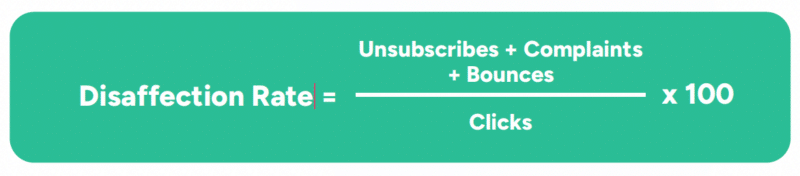
In other words, it answers a question most dashboards ignore: How quickly are you burning through your audience?
This matters because inbox providers increasingly treat negative signals as stronger indicators than positive ones. A campaign with decent click rates can still hurt deliverability if it generates enough complaints or unsubscribes.
The takeaway for marketers is straightforward: optimizing for clicks alone isn’t enough. Sustained performance depends on minimizing friction and fatigue over time.
2. Reply rate is the real measure of engagement
Clicks can be accidental. Opens are often unreliable. Replies, on the other hand, require intent.
That’s why reply rate is emerging as a key engagement signal. In the report’s example, even a 1% reply rate represents a meaningful level of audience investment — these are subscribers who cared enough to respond.

Mailbox providers increasingly interpret this kind of interaction as a strong trust signal. Emails that invite and generate replies are more likely to be seen as relevant — and placed in the inbox accordingly.
This has practical implications for email strategy. Campaigns are starting to look less like broadcasts and more like conversations, with prompts for feedback, questions or direct responses built into the content.
It also introduces operational challenges. As reply volume grows, more teams are turning to automation or AI agents to manage responses at scale — effectively blending email marketing with customer support.
3. Quantifying trust
“Build trust” has long been a marketing cliché. What’s changing is the attempt to measure it.
The report outlines a framework for trustworthiness that combines credibility, reliability and intimacy, adjusted by how self-focused a brand appears.

While subjective, these components map closely to how subscribers evaluate emails:
- Credibility: Does this sender know what they’re talking about?
- Reliability: Do they consistently follow through?
- Intimacy: Do I feel safe engaging with them?
- Self-orientation: Is this about me, or just them?
The challenge is turning these into actionable metrics. Suggested approaches include tracking replies, monitoring complaint rates, encouraging preference updates and actively collecting feedback.
What’s notable is that trust can move in both directions — and negative signals often carry more weight.
The world’s most powerful SEO platform, purpose-built for Enterprise.
Recommended Articles
Shifting from campaign metrics to relationship metrics
Taken together, these three metrics reflect a broader change in email marketing.
Performance is no longer just about what happens immediately after a send. It’s about how recipients perceive and interact with a brand over time.
That aligns with how mailbox providers now filter inboxes. Engagement isn’t just measured — it’s interpreted. And the signals they prioritize increasingly resemble relationship health, not campaign performance.
For marketers, that means success is becoming harder to game.
And that’s probably the point.
Validity 2026 Email Benchmark Report link. (Registration required)
MarTech is owned by Semrush. We remain committed to providing high-quality coverage of marketing topics. Unless otherwise noted, this page’s content was written by either an employee or a paid contractor of Semrush Inc.

Constantine von Hoffman is senior editor of MarTech. A veteran journalist, Con has covered business, finance, marketing and tech for CBSNews.com, Brandweek, CMO, and Inc. He has been city editor of the Boston Herald, news producer at NPR, and has written for Harvard Business Review, Boston Magazine, Sierra, and many other publications. He has also been a professional stand-up comedian, given talks at anime and gaming conventions on everything from My Neighbor Totoro to the history of dice and boardgames, and is author of the magical realist novel John Henry the Revelator. He lives in Boston with his wife, Jennifer, and either too many or too few dogs.
View Author Profile
Add us as a preferred source on Google
Google's "preferred sources" feature allows users to customize their search results by selecting news outlets they want to see more often in the "Top Stories" section.
Add Martech NowRelated Articles

Attribution, accuracy, and authenticity offer a starting point for responsible AI use — and for protecting your brand's credibility.
Read More
Every new piece of content shouldn't mean starting from zero. Learn how to turn fleeting social media attention into ongoing audience relationships.
Read More
Use customer behavior, inaction, and contextual signals to build more relevant email automations and triggered campaigns.
Read More
The first purchase gives you clues about what a customer may need next. Use them to build more relevant post-purchase journeys.
Read MoreRelated Articles
Attribution, accuracy, and authenticity offer a starting point for responsible AI use — and for protecting your brand's credibility.
Read More
Every new piece of content shouldn't mean starting from zero. Learn how to turn fleeting social media attention into ongoing audience relationships.
Read More
Use customer behavior, inaction, and contextual signals to build more relevant email automations and triggered campaigns.
Read More
The first purchase gives you clues about what a customer may need next. Use them to build more relevant post-purchase journeys.
Read More