

Branded search is becoming a less reliable proxy for brand demand
Consumers aren't searching for your brand less. They're making decisions before they ever perform a branded search.
Spy on Any Website
Marketers have long treated branded search as a practical proxy for brand demand. Increasingly, that assumption appears less reliable.
Search measures intent. Brand influences where that intent goes. The relationship has been consistent enough that branded search is a reliable indicator of brand demand.
Our data reinforces that relationship. Across our client portfolio, branded customer acquisition costs are, on average, 76.6% lower than non-branded acquisition costs. Yet our data also reveals a more consequential trend. Over the past month, branded search demand declined 11.1%, despite a relatively unchanged auction environment.
If branded search remains a reliable indicator of brand demand, the implication is straightforward: demand itself must be weakening. The evidence suggests otherwise.
The world’s most powerful SEO platform, purpose-built for Enterprise.
When the proxy stops reflecting reality
To understand why, it helps to eliminate the most obvious alternative explanations.
- The first possibility is that consumers are entering the market with weaker brand preferences. Based on normalized data from Google Keyword Planner and Semrush, the evidence doesn’t support that conclusion.
- The second possibility is declining engagement with search results. Research from Rand Fishkin suggests users are clicking less frequently across search. Notably, however, navigational searches, as classified by Semrush, haven’t experienced a meaningful decline in reported click-through rates.
- The third possibility is macroeconomic pressure. If deteriorating economic conditions suppressed demand, we’d expect a corresponding decline in overall search volume. The available data doesn’t indicate that.
Having considered these explanations, a different conclusion becomes more plausible. Consumers aren’t necessarily expressing less demand. They’re expressing demand differently.
AI-powered search offers a more compelling explanation. Less than 12 months ago, AI Overviews appeared in 57.2% of commercial searches for a core keyword query for one of our clients. By June 2026, that figure increased to 95.9%.
As AI systems answer questions, compare alternatives, and synthesize information before users perform additional searches, branded search captures a smaller share of the decision-making process. The observable metric changes even if the underlying preference doesn’t.
At its core, this is a measurement problem rather than a demand problem.
Why this changes marketing decisions
This distinction matters because organizations allocate capital according to the metrics they trust. That dynamic also helps explain why performance marketing commands such a disproportionate share of marketing investment.
When a metric appears to provide a direct line between spending and measurable outcomes, capital naturally follows. If that metric is a less reliable representation of the underlying objective, capital allocation risks becoming distorted.
If branded search underrepresents brand demand, marketers risk concluding their brands are weakening when, in reality, consumer behavior simply shifted upstream. The consequence is predictable: underinvestment in the activities that create long-term preference.
Search still measures expressed intent. What changed is that expressed intent is no longer synonymous with underlying demand. AI inserted an additional layer between consumer preference and observable search behavior. Branded search remains useful, but it should no longer be treated as definitive.
The implication extends beyond search. Any time a long-standing proxy becomes less representative of the phenomenon it was intended to measure, organizations risk optimizing for the proxy rather than the objective itself. Marketing is unlikely to be an exception.
Recommended Articles
Rethinking how brand demand is measured
If branded search is becoming a less reliable measure of brand demand, that doesn’t mean abandoning the metric. It’s to reconsider the framework within which it’s interpreted.
Branded search should remain one indicator of brand demand, but no longer its definitive proxy. Greater emphasis should shift to measures that more directly capture preference, including unaided awareness, contextualized share of search, and brand conversion rate.
If preference precedes measurable intent, investments in distinctive positioning, original research, thought leadership, and sustained brand building should no longer be viewed as adjacent to performance. They’re the activities that determine it.
Changing capital allocation also changes where competitive advantage is built. As AI becomes an intermediary between consumers and information, authority extends beyond channels a brand directly controls.
Competitive advantage may depend less on producing more content than on becoming part of the trusted body of evidence AI systems consistently reference. Increasingly, visibility may come through credibility rather than distribution.
Search will likely continue to measure intent. Branded search, however, appears to capture a narrower expression of brand demand than it once did. Organizations that recognize this shift early may not simply measure brand performance more accurately. They may allocate capital more effectively because they understand the distinction between the metric and the underlying demand it seeks to represent.
Contributing authors are invited to create content for MarTech and are chosen for their expertise and contribution to the martech community. Our contributors work under the oversight of the editorial staff and contributions are checked for quality and relevance to our readers. MarTech is owned by Semrush. Contributor was not asked to make any direct or indirect mentions of Semrush. The opinions they express are their own.

Alex leads performance marketing at Boathouse. In 2024, he and his team were recognized as Search Engine Land’s PPC Agency of the Year. He earned a MBA in 2022.
View Author Profile
Add us as a preferred source on Google
Google's "preferred sources" feature allows users to customize their search results by selecting news outlets they want to see more often in the "Top Stories" section.
Add Martech NowRelated Articles
Local search behavior now straddles multiple platforms, with consumers traversing a 'verification loop' to find actionable information.
Read More
AI is changing search, but some of the loudest claims about traffic, content, measurement, and SEO jobs don’t hold up when you check the numbers.
Read More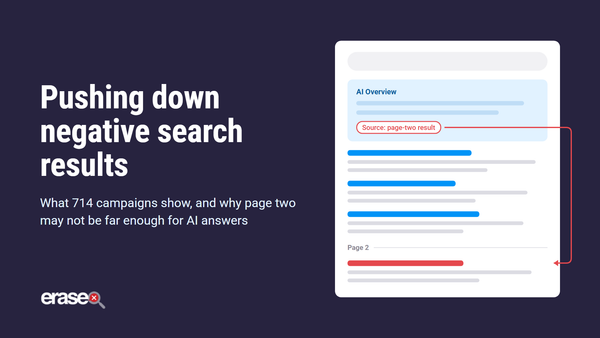
Starting position and top 10 placements decided the outcome, not publishing volume. Plus why Page 2 isn't far enough for AI Overviews.
Read More
Move beyond optimizing individual images by connecting visual assets to authoritative entity data and keeping those signals consistent.
Read MoreRelated Articles
Local search behavior now straddles multiple platforms, with consumers traversing a 'verification loop' to find actionable information.
Read More
AI is changing search, but some of the loudest claims about traffic, content, measurement, and SEO jobs don’t hold up when you check the numbers.
Read More
Starting position and top 10 placements decided the outcome, not publishing volume. Plus why Page 2 isn't far enough for AI Overviews.
Read More
Move beyond optimizing individual images by connecting visual assets to authoritative entity data and keeping those signals consistent.
Read More